Why SPF Is the Best Anti-Aging Product
Sunscreen isn't just for sunny days. Learn why daily protection is the foundation of healthy skin.
The strongest anti-aging product is the simplest one
If you could only keep one product from your entire routine, the honest answer is sunscreen. Not a serum, not a retinoid, not a cream. Most of what people describe as visible skin aging — fine lines, uneven pigment, loss of firmness, broken capillaries — is photoaging, meaning cumulative damage from ultraviolet light rather than birthdays. That's the portion you can prevent.
What UV actually does
UVB is the shorter wavelength that causes sunburn and most direct DNA damage. UVA penetrates deeper, generates free radicals, degrades collagen and elastin, and drives the pigment changes that show up as sun spots. UVA passes through window glass and is present at fairly consistent levels through the day and across seasons, which is why an overcast Tuesday spent indoors near a window still counts.
Once collagen has been broken down, restoring it is slow and partial work — that's what retinoids and years of consistency are for. Preventing the breakdown costs you fifteen seconds each morning.
Reading a label
SPF measures protection against UVB. “Broad spectrum” indicates meaningful UVA protection as well, and that phrase matters as much as the number. SPF 30 filters about 97% of UVB and SPF 50 about 98% — the jump from 30 to 50 is smaller than most people assume, and far less important than whether you apply enough and reapply.
Mineral filters (zinc oxide, titanium dioxide) sit on the surface and are generally the gentler choice for reactive or post-procedure skin. Chemical filters absorb UV and convert it, and modern ones tend to feel lighter with no cast. Both work. The best sunscreen is the one whose texture you'll tolerate every single day.
Amount and reapplication
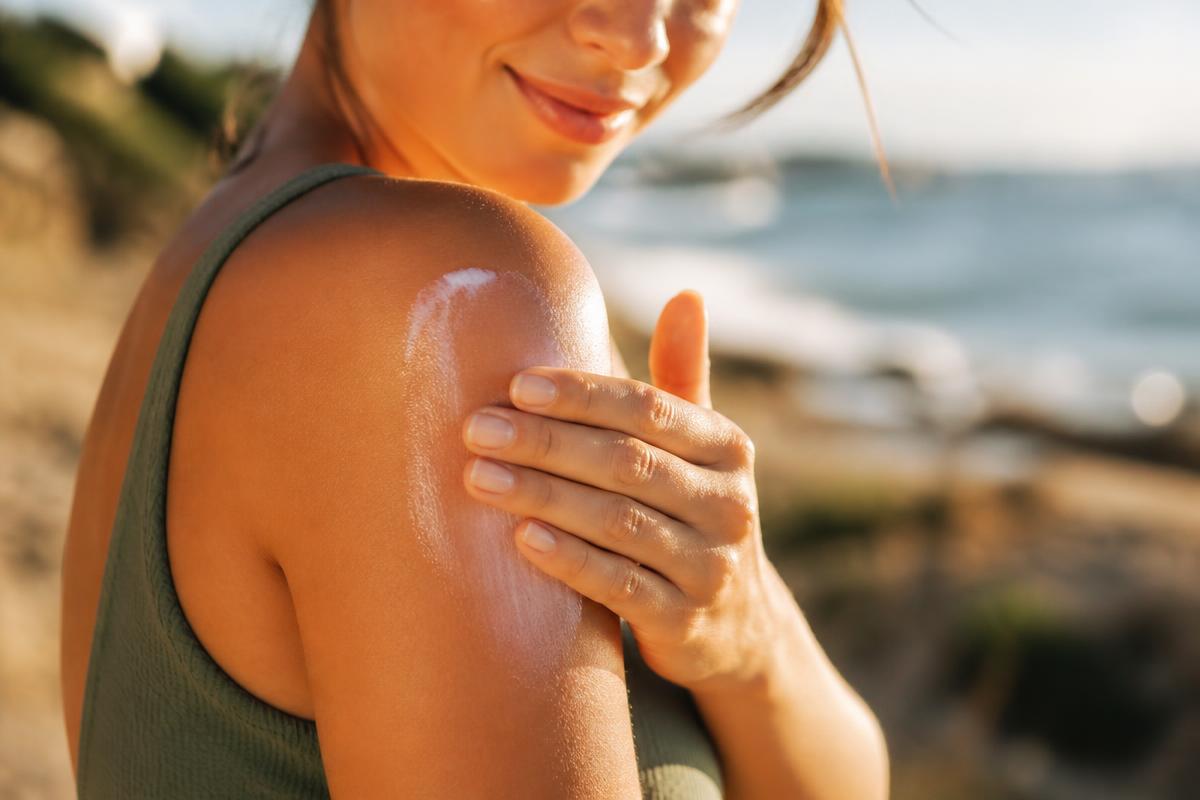
Most people apply a quarter to a third of what was tested, which turns an SPF 50 into something closer to SPF 15. For the face and neck, aim for roughly two finger-lengths of product, or a generous quarter-teaspoon. Don't skip the sides of the neck, the ears, and the backs of the hands — the places that quietly reveal sun history.
Reapply every two hours of meaningful exposure, and after swimming or heavy sweating. If you're indoors all day away from direct light, a single morning application is reasonable. Stick or powder formats make midday reapplication realistic rather than theoretical.
It makes the rest of your routine work
There's a practical argument beyond prevention. Vitamin C, retinoids, and exfoliating acids all leave skin more photosensitive, and their results are directly undermined by ongoing UV exposure. Using a brightening serum without daily sunscreen is bailing out a boat while leaving the hole open — you're spending money to fade pigment the sun re-triggers each afternoon.
What to expect
Sunscreen is the only skincare product whose benefit is invisible: nothing happens, and that's the result. Studies following daily broad-spectrum use over a year show measurably less fine wrinkling and pigment change than in non-users — over a decade, the difference is the kind you notice in photographs.
Start tomorrow morning. Cleanse, treat, moisturize, then a proper quarter-teaspoon of broad-spectrum SPF 30 or higher, every day, regardless of weather or plans. It's the least glamorous habit in skincare and by a wide margin the most effective.